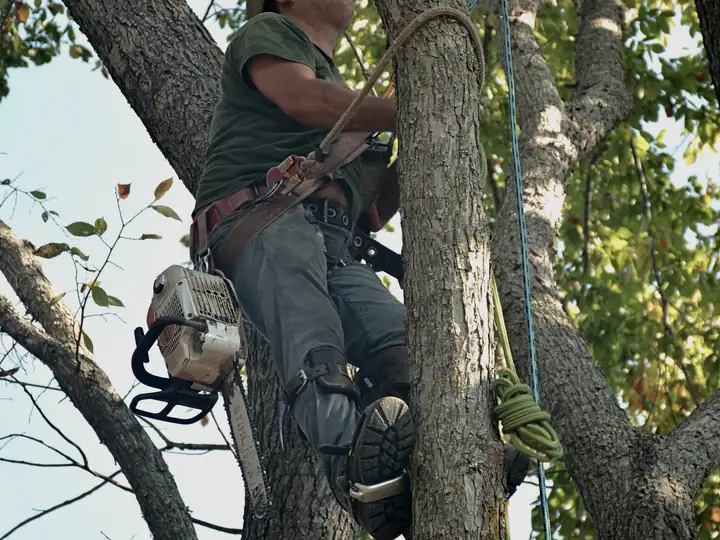
Most deciduous trees: prune when they are fully dormant
University of Illinois Extension horticulture educator Sarah Vogel, in a February 7, 2022 article we re-read on November 21, 2026, says pruning is done to reduce the size and shape of a plant, to increase flower or fruit production, and to promote sound structure. For most deciduous trees, including fruit trees, late winter is a good time. Pruning while the tree is dormant lets you see the shape without leaves, and it leaves enough time for the wound to close properly (Illinois Extension: Trim trees in the dormant season).
Ken Johnson, an Extension horticulture educator writing in Good Growing on February 18, 2019, puts that window for this part of the country in February or March, and stresses that the tree should be fully dormant. If you prune too early, before the tree is fully dormant, it may push new shoots that cold weather can kill (Illinois Extension: Winter Tree Pruning).
Both articles agree on one point that does not wait for winter: dead, dying, or broken branches can come off at any time of year (Vogel; Johnson).
Oaks, elms, river birch, and evergreens are different
Vogel lists clear exceptions. To reduce the spread of oak wilt, oaks should not be pruned from March through October (same 2022 article). That is the same seasonal line our Joliet oak wilt pruning guide is built around. If you have a red or pin oak in a Joliet, Frankfort, or New Lenox yard, use that window, not a generic "trim it this fall" rule.
Johnson adds why winter cuts matter for oaks and elms in particular: pruning wounds can attract borers, and those beetles can carry oak wilt and Dutch elm disease (Johnson).
River birch, Vogel says, responds best to cuts made in late fall or early winter after the leaves have fallen and when sap flow is reduced. Evergreens are another exception. Fall pruning is not recommended for them, because any new growth is susceptible to winter injury. Juniper and yew can be pruned in March or April before new growth emerges. Pine, spruce, and fir generally need very little pruning, and removing lower branches is not advisable because it can compromise the tree's structure. Spruce and fir can be cut back to lateral buds on the newest growth in early spring if you want a denser form. Pines grow only from terminal buds; they are pruned in spring or early summer at the candle stage by removing two-thirds of the elongated bud, and they should not be cut back to older wood, which will not resprout (Vogel).
How to make the cut — and what not to paint on it
When a branch is cut correctly at a node or at the branch collar, Vogel says the tree can seal the wound and help keep decay and pests out. Johnson's practical order of work is: start with dead and dying wood, then look for crossed or rubbing branches, branches growing toward the center, narrow crotch angles that are more likely to break, multiple leaders, and limbs that may pose a hazard to people or property. Fixing those problems on a younger tree can avoid heavier work later. For a large, mature tree, he says it may be best to call a certified arborist, who will have the tools and safety equipment (Johnson).
Vogel also says to sanitize tools between plants with a 10% bleach solution or undiluted 70% isopropyl alcohol, and to sanitize between each cut if a disease is suspected (Vogel). Johnson's tool sizes: hand shears for branches up to 1/4 inch, loppers up to 1 1/2 inches, and a pruning saw for branches over 1 inch, with sharp blades so the cut is not crushed or torn (same 2019 article).
Do not paint the wound. Johnson writes that sealing pruning cuts was recommended for years, but research has shown it is not as helpful as once believed. Coatings often crack, let moisture in, and create a good environment for wood-rotting organisms. Trees callus the wound themselves, and sealing actually slows that process (Johnson).
Vogel has a separate warning for shrubs that also applies if you are tempted to "get a jump" on the yard in August: do not prune deciduous shrubs in late summer, because that encourages a flush of new growth that will not harden off before winter (Vogel).
Village parkway crews may trim on a different calendar
Several Will County towns run their own parkway trimming, and that schedule is about clearance for plows and trucks, not about the biology of a backyard oak. Manhattan's Public Works page, which we read on November 21, 2026, says the Village trims parkway trees during the fall, including larger branches that interfere with plow trucks, garbage trucks, or school buses (Village of Manhattan: Parkway Tree Maintenance). That is a Village job on Village parkway trees. It is not a reason to prune a private oak in September.
If the tree is between the sidewalk and the street, start with the town page — Manhattan, Frankfort, Mokena, Bolingbrook, Homer Glen, or the City of Joliet parkway rules — and ask that public works department before anyone climbs a parkway tree. For a tree in the yard, use the Extension timing above and our trimming overview. ComEd's rights near a service drop are in the ComEd service-drop guide.
Extension and Village pages can change. If a later article or a municipal staff member tells you something different, theirs wins. We re-read the two Illinois Extension articles and the Manhattan parkway page on November 21, 2026.
Sources
Checked Nov. 21, 2026. If a City rule has changed since, the City’s page wins.